Thinking about moving to Boulder, Colorado? Good instinct, complicated math. Here is the honest version from people who actually live here, with 2026 numbers and a few facts that quietly contradict the usual relocation-guide script. Moving to Boulder Colorado is less about beating a red-hot market and more about deciding what a mountain-locked town is worth to you.
What It Costs, Actually
Start with the number everyone asks about first. As of mid-2026 the median sale price across all property types in the city sat right around $1,026,000 (Redfin, July 2026), while Zillow's broader average home value came in a touch lower at about $971,000, down 1.5 percent year over year. Those are the "all homes" figures, condos and townhomes included. If you specifically want a detached single-family house with a yard, the median cracked $1.5 million again in August, per BizWest. Two different numbers, two different products, and guides that quote one without the other get called out for it.
Here is the part that surprises people still running on the 2021 story: the market has cooled. Prices are flat to slightly down year over year, inventory is up roughly 32 percent, and homes sit for 50 to 80 days before they sell (about 64 days on average in July). That is more negotiable than the bidding-war folklore suggests. You can think for a weekend before making an offer now, which was not true a few years ago.
Renting is the affordable-ish door in. A one-bedroom runs roughly $1,750 to $1,950 a month depending on the tracker, and a two-bedroom lands around $2,400 to $2,600. The overall median rent is about $1,904, down 3.8 percent over the trailing year, a headline this town is not used to writing.
Boulder Versus Denver
People weighing Boulder almost always weigh it against Denver, so here is the comparison straight. Overall, Boulder costs about 8 percent more than Denver. But housing is where the real gap opens: Denver's median home is around $600,000, so Boulder charges a premium of roughly $340,000 or more for the same square footage in a different zip code. Local salaries pay only about 2.9 percent more than Denver for the same role, nowhere near enough to offset that premium. You pay for the trails. Nobody here pretends otherwise.
The Neighborhoods
Boulder is small, but the neighborhoods have genuinely different personalities and price tags. Mapleton Hill and Newlands are the historic tree-canopy blocks just north of Pearl Street, where homes typically run $1.5 million to $5 million-plus and the Newlands side backs straight onto the Mountain Parks trails. NeighborhoodScout pegs the combined median near $2.9 million, the high end of town.
Table Mesa, in south Boulder, is the family-oriented classic, sitting near the NCAR Mesa Lab trailheads with a broader south Boulder median around $845,000, comparatively down to earth for this town. Gunbarrel is the cheapest way into a Boulder address at roughly $795,000. It has a suburban feel, sits about 15 minutes from downtown, and much of it is technically unincorporated, so read the fine print on what "Boulder" means before you sign.
North Boulder is where the newest energy lives. The NoBo Art District has been grassroots since 2009 and earned official designation as a Colorado Creative District in 2025. Its First Friday art walks draw more than 8,000 visitors a year across roughly 200 venues and around 800 artists. For more detail on any of these blocks, our neighborhood guides go deeper.
Work, and One Honest Caveat
CU Boulder anchors the whole economy. The university enrolled 38,808 students in its fall 2025 census and employs around 11,668 people, far and away the largest employer in town. After that the private sector fills in: Google built its Pearl Place campus, four acres and 330,000 square feet, for roughly 1,500 employees, up from about 300 before 2021. BAE Systems Space & Mission Systems, the former Ball Aerospace, employs about 5,200 people, though its headquarters is next door in Broomfield rather than Boulder proper. BAE completed that roughly $5.5 billion acquisition in February 2024, so if you knew it as Ball, the name has changed.
Now the caveat, and it is a real one. Boulder is famous for its federal science labs, NOAA, NIST, and NCAR, which together employ more than 3,500 people (most of them not direct federal employees). As of 2026 that picture is genuinely unstable. The FY2026 NOAA budget proposal would eliminate its research arm, including four Boulder labs, and proposals sought steep reductions at NCAR and NIST too. About half the staff at NOAA's Global Monitoring Lab faced furlough during a funding freeze that dragged into 2026. These institutions have weathered storms before, but if you are moving here for a "stable government science job," treat that as a claim to verify. One more note for anyone remembering old Boulder: IBM's once-huge Gunbarrel-area presence has largely wound down, its data center operations spun off to Kyndryl. Do not count IBM as a top employer here anymore.
Why It Looks the Way It Does
Boulder essentially invented American growth control, and that history explains both the beauty and the price. The 1959 Blue Line, a charter amendment, cut off city water service above 5,750 feet of elevation and stopped foothills development cold. In November 1967 voters approved the nation's first sales tax dedicated to buying open space. A 1971 voter-driven ordinance capped building height at 55 feet, roughly the height of a mature Boulder tree. The 1976 Danish Plan then limited residential growth to about 2 percent a year, one of the earliest and most-copied growth caps in the country.
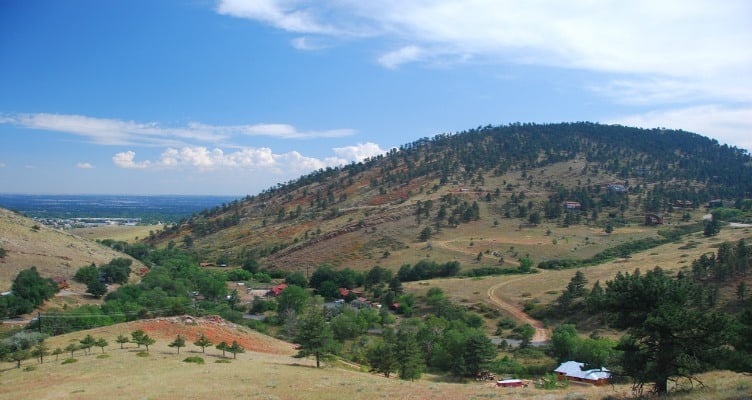
The payoff is the greenbelt. Open Space and Mountain Parks has preserved more than 46,640 acres with about 155 miles of trails, a buffer that physically seals the city off from the towns around it. That is why Boulder is both gorgeous and expensive, and why the population, somewhere between 105,000 and 107,000, is slightly declining rather than booming. The 2020 Census counted 108,431 residents, and the trend has been gently downward since.
Daily Life
Schools
Boulder Valley School District ranks #2 among Colorado districts and #1 in the Denver metro on Niche's 2026 list, with a 4.04 out of 5 rating and #420 nationally out of more than 10,000. It runs 56 schools and about 27,541 students. Worth knowing before you buy a house for its school assignment: BVSD enrollment is shrinking, and the district has an official "Resilient Schools" response to declining enrollment, which can mean boundary and program changes over time. If you are relocating with kids, our Boulder with kids guide covers the practical side.
The Commute
Denver is about 30 miles away via US 36, roughly a 45-minute drive that stretches another 15 to 30 minutes at rush hour. To skip traffic, the US 36 Express Lanes run from Westminster to Table Mesa Drive with dynamic tolling that typically costs $2 to $6 and climbs to $8 to $12 at peak; carpools of three or more ride free. An 18-mile commuter bikeway parallels the highway. Prefer transit? RTD's Flatiron Flyer bus rapid transit connects Boulder to Denver's Union Station in just under an hour, running about every 10 minutes at peak.
The Weather
You will hear "300 days of sunshine" everywhere. It is a myth, traced to an 1870s railroad publicist. National Weather Service data shows roughly 115 fully clear days plus about 130 partly cloudy ones, so call it around 245 clear-or-partly-sunny days. The 300 figure only works if you count any day with at least an hour of sun. Snow averages about 89 inches a year over a season that runs October to May, but it tends to melt fast, and the chinook winds, the "snow eater" downslope gusts, can raise temperatures 40 to 60 degrees in under 12 hours, and the town averages 20 to 25 high-wind days a year. Winter here is worth its own read in our winter in Boulder guide.
The Newest Wrinkle
Here is the fresh development reshaping the calendar: the Sundance Film Festival is moving to Boulder after more than 40 years in Park City, with the first edition running January 21 to 31, 2027. Named venues include the Boulder Theater, Boulder High School Auditorium, Casey Middle School, Chautauqua Auditorium, Cinemark Century Boulder, eTown Hall, and the Dairy Arts Center. It is a 10-year commitment backed by roughly $70 million in state and local incentives, and Colorado projects more than $2 billion in cumulative economic impact over the decade. For a January transplant, your new hometown now hosts one of the biggest film festivals in the world. Start with our master things-to-do list.
Frequently Asked Questions
Is Boulder a Good Time to Buy a House Right Now?
It is a more balanced market than it has been in years. As of 2026, prices are flat to slightly down year over year, inventory is up about 32 percent, and homes sit for 50 to 80 days before selling. That gives buyers real negotiating room, though the median all-homes price is still around $1 million.
How Much Does It Cost to Live in Boulder Compared to Denver?
Boulder runs about 8 percent more expensive than Denver overall, and the gap is mostly housing: Denver's median home is around $600,000 versus roughly $1 million in Boulder, a premium of about $340,000. Salaries are only about 2.9 percent higher, so the extra pay does not cover the extra housing cost.
Does Boulder Really Get 300 Days of Sunshine?
No. That line traces back to an 1870s railroad marketing campaign. National Weather Service data points to about 245 clear-or-partly-sunny days a year, roughly 115 fully clear plus 130 partly cloudy. The 300 figure only holds if you count any day with at least an hour of sun.
How Far Is Boulder from Denver, and How Long Is the Commute?
Boulder is about 30 miles from Denver via US 36, a roughly 45-minute drive that adds 15 to 30 minutes at rush hour. The US 36 Express Lanes are a faster paid option, and RTD's Flatiron Flyer bus reaches Union Station in just under an hour.
Which Boulder Neighborhood Is the Most Affordable?
Gunbarrel is the cheapest route to a Boulder address, with a median around $795,000 and a suburban feel about 15 minutes from downtown. Much of it is technically unincorporated, so confirm what you are buying. South Boulder's Table Mesa, around $845,000, is the next step up and popular with families.
Is Boulder Growing or Shrinking in Population?
Slightly shrinking. The 2020 Census counted 108,431 residents, and 2026 estimates put the city between roughly 105,000 and 107,000. Decades of growth-control policy, from the 1959 Blue Line to the greenbelt of more than 46,640 acres, keep it from sprawling, so it does not add much population.